Sunday, 25 August 2013

Using sport to tackle youth crime

Football Beyond Borders recently took part in a course on using sport to tackle youth crime. Kieran Gibb reflects on the experience.
In the last two weeks several young lads from Football Beyond Borders (FBB) and Youth Futures (YF) journeyed to Selhurst Park stadium, home of Crystal Palace FC. We withheld the urge to race out onto the pitch, dummy round in invisible keeper, dink it in and follow up with the most ridiculous celebration ideas in front of an imaginary crowd; instead we set our minds to the more immediate task at hand. Active Communities Network, together with the Rio Ferdinand Foundation, had funded us to undertake their 1st4Sport 'Using Sport to Tackle Youth Crime' coaching and mentoring session. The QFC course itself was conducted over 8 days, with fieldwork assignments to be completed in the interim period between Mondays.

It was a great experience working with such a diverse and interesting group of people, formulating ideas, conducting in-depth discussions across a broad age range about issues within our society that affect and direct the thought and action of young people today. We had a laugh sharing ideas, especially enjoying the role play, building lines of solidarity and empathy. The course itself was a sharing experience and further developed my understanding of the issues that face disaffected youth in deprived areas on a daily basis. 

Our discussions ranged from the daily reality of racism for deprived black youth, the impact of draconian policing, materialism and conspicuous consumption, to the positive values of difference and diversity, equality and most of all, respect. We also explored mentoring and the practicalities of life within that. Michael Nyarko and Richard Leahey, our coaches for the course, facilitated an interactive educational and bonding process. Michael himself noted that what was so different to his usual sessions was that our group traversed a wide age range, from 16 through to 26, making for a series of intergenerational discussions that proved particularly enlightening. We were all together to learn, beyond borders.
“Normally we'd have a group of mentors, a group of freshmen, a group of young people, we very rarely have them mixed together, so I think for us, the learning process indicates that we should do more things like this, there is a chance for more shared learning.” (Michael Nyarko)
All of us walked away from Selhurst Park feeling like we had learned so much. By mixing up the groups regularly Michael enabled everyone to work together in different formats, hear new voices and get to know the group. Jasper Kain from FBB praised their coaching methods, “[they've] delivered some top quality coaching which has come at a perfect time for us which I know we're all going to take back now and I think its been a real asset for what we're going to do moving forward.”

For our fieldwork assignment, I travelled down to Camberwell to meet youth worker Joseph Duncan and some of the Youth Futures guys to conduct a football coaching session with the younger kids on the Wyndham Estate. After introducing us to everyone and making me feel welcome, we rounded up all who would play and got a 5-a-side game going on a small patch of concrete just next to the old Synergy community centre – jumpers and a ball, what else do you need? It reminded me of playing up at Alexandra Palace during my summer holidays from school. The kids were fantastic, one in particular scoring 4 goals for our team and ensuring a 7-2 victory!
I would like to thank the Camberwell community for receiving us, and the kids for a great game. I'd also like to thank Michael and Richard and the rest of the Active Communities Network, the Rio Ferdinand Foundation, Football Beyond Borders and most of all, Youth Futures, all of whom gifted me with an amazing opportunity to meet some inspiring new people and gain some useful skills.
“Take what you have learned collectively, and try and use it, the only way you can really use it is to get outside into those places and make sure you use it effectively. You have the potential to be great youth workers, leaders, mentors, coaches, tutors, teachers; whatever you choose to be. Go and make a change out there. I'm sure you all will.” (Michael Nyarko)

Thursday, 18 July 2013

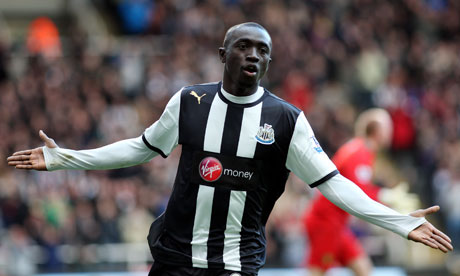
Cissé out of Newcastle pre-season tour amid Wonga controversy

Ben Finn looks at Papiss Cisse's falling out with Newcastle over their sponsor

Having ostensibly being forced to train alone upon his return to Benton Park (Newcastle’s training ground) last week, Papiss Demba Cissé is to miss out on Newcastle’s pre-season tour of Portugal this week as a result of his refusal to wear any apparel endorsing the payday loan company Wonga.

Details of the discussions between Cissé’s team and Newcastle are unclear, with some reports saying he was dropped by the club and others saying he pulled out himself. What we do know is that Cissé has offered to wear either a shirt advertising a charity or with no sponsor at all. Evidently this is unsatisfactory to the powers that be.


Cissé’s refusal to endorse Wonga is borne out of an interpretation of Sharia law that states that a Muslim cannot benefit financially from lending or receiving money. There is, however, a precedent for this kind of protest. Freddie Kanouté, whilst playing for Sevilla, objected to the “888.com” sponsor for similar reasons to Cissé. Sevilla respected Kanouté’s views and as a result allowed him to cover the sponsor when playing and did not make him attend events sponsored by the gambling website. This was a refreshingly mature negotiation for a modern football club that demonstrated how much Sevilla valued Kanouté’s beliefs. Hopefully an analogous mutually beneficial solution can be found at Newcastle.

On the other hand, whilst there is no doubt that Wonga opposes Cissé’s views, should he not have taken the same stance in the past? Newcastle’s previous two sponsors were Virgin Money and Northern Rock, both of whom charge interest on their loans and pay interest on holders’ deposits. Admittedly, Wonga’s APR is over 4000%, but surely interest is interest regardless of the percentage.

This raises questions of ulterior motives for Cissé’s protest. It is rumoured that the striker could be using the issue as leverage over the board to either hand him a new contract, or sell him. However, I am sceptical of most ‘rumours’ designed to fill column inches during the summer transfer window during which bored journalists (present company included) and agents try to whip up a storm over nothing.

Nevertheless, considering the string of PR disasters that have plagued Newcastle in recent months - renaming St James’ Park, the Wonga sponsorship and the Joe Kinnear debacle - allowing Cissé to follow his religious beliefs seems to me a good place to stop the rot. Furthermore, PFA chief executive Bobby Barnes has told the BBC that "[i]f someone feels very, very strongly that it [the club sponsor] is not compatible with their beliefs, then some sort of solution should be found."


Clearly, Cissé does feel “very, very strongly” and a solution should be found. As a Newcastle fan myself, I just hope the solution involves him remaining at the club - mainly out of fear of Shola Ameobi being handed the number 9 shirt.

Friday, 5 July 2013

Whose Tottenham?


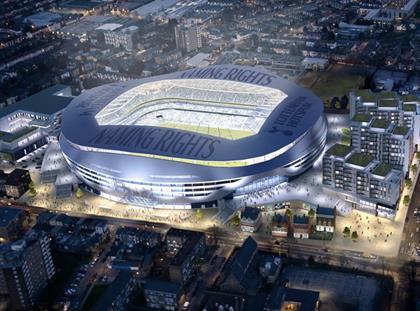
Local residents are fighting back against the gentrification led by Tottenham Hotspur's stadium redevelopment plans. Spurs fan Joel Sharples looks at how the club has let down the community it is supposedly a part of. 

The recent protest movement in Brazil has drawn the world’s attention to the way in which sport-led development can act to disenfranchise, uproot and divert funding away from low-income communities. Less attention, however, has been given to the strikingly similar dynamics at work on a smaller scale in North London, where residents of Tottenham are facing eviction from their homes as a result of Tottenham Hotspur Football Club’s stadium redevelopment plans. The #AgainstModernFootball concept is gaining traction at the moment and perhaps this is emblematic of why – football clubs are now not just disconnected from the communities that they are a part of; they are actively contributing to the destruction of those communities.

You might have thought that the 11th richest club in the world that stands to make windfall gains of over £100m over the next three years from the new TV revenue deal might be able to dredge up the additional £5m that is supposedly needed to release private investment for the new stadium. Instead they are turning to Haringey council, who intend to raise the £5m through the sale of the Love Lane/Whitehall Street estate, which sits between White Hart Lane station and the stadium. This could lead to the demolition of nearly 300 council homes, with residents being kept in the dark about whether they will be found suitable accommodation in the area. Given that Haringey has one of the longest council housing waiting lists in the country, with 10% of all households in the borough on the list, it is highly unlikely that they will.


Spurs have played their cards well with the council in recent years, using the threat of exodus to the Olympic Stadium in Stratford to squeeze ever-greater amounts of public subsidy from Haringey Council and the Greater London Authority. In 2011 the council leader Claire Kober stated that no public money would go into the development and Spurs would provide £15-16m in Section 106 funding to redevelop the local area. Nine months later a £17m public funding package was on the table and by January 2012 this was raised to £41.3m with almost all of Spurs’s S106 obligations dropped. Ironically, this is almost exactly the sum that Spurs challenged in the courts as illegal “state aid” when it was offered by Newham Council to West Ham to develop the Olympic Stadium.

Perhaps most cynical, and audacious, is how they tapped into £8.5 million of the £50 million set aside by Boris Johnson to develop areas affected by the August 2011 riots. In doing so, they have effectively cashed in on the social unrest in Tottenham to fund a stadium that will provide huge profits for shareholders and little if any benefit to the surrounding community. The money will essentially go towards funding the improvements to infrastructure surrounding the stadium that Spurs would have had to provide anyway to cope with the extra 20,000-odd fans travelling to the area on match days.


But what is most concerning for local residents is how THFC has shirked its responsibility to provide affordable housing at the same time as it is destroying existing council-owned homes. In its initial plans Spurs had an obligation to provide 100 affordable homes alongside 100 to be sold on the open market. This in itself was pitifully low given the housing crisis in Haringey, but in 2012 the council responded to Spurs’s blackmailing by waiving this requirement as well as the £1.2 million that had been promised to improve local schools. Instead the club has been allowed to build 285 homes that will be sold at market rates. These will be overwhelmingly one and two bedroom flats that will no doubt be snapped up by City workers enjoying the improved overground links to central London, also paid for with public money. This will contribute to pushing up rents in the area which, combined with the benefits cap which has been introduced in Haringey, could force large numbers of low-income families out of their homes.

As a lifelong Spurs fan the slow realization that the club I love is no different to any other large corporation in its parasitism and disrespect for community life has been a painful one. However, as stakeholders in the club and potential punters at the new stadium, I think fans have a responsibility to show solidarity with those who will be affected and potentially displaced by the new development.

Local residents and traders have been mobilising to resist the current wave of gentrification that is sweeping through Tottenham, driven by the stadium redevelopment plans. Our Tottenham are organising a street assembly this Saturday 6th July to say no to the threat of evictions, high rents and loss of community services and demand the improvements that the neighbourhood actually needs.

Follow Joel on Twitter: @JoelJBSharples

Brazil Protests: Implications for 2014

In the first of a series of new blogs looking at broader dynamics in football and social change, Ben Finn analyses the causes and results of the recent protest movement in Brazil


Over 1 million people lined the streets across Brazil on 20th June to protest about a variety of injustices from Dilma Rousseff’s government. A proposed rise in Sao Paulo bus fares was the catalyst, but the reasons behind the demonstrations have flitted between the interconnected motives of anger at poor public services, outrage at the pervasiveness of political corruption and the lavish expenditure on the 2014 World Cup.

At 28 billion rials ($12.6 billion), Brazil’s World Cup is by far the most expensive ever - three times the cost of Germany 2006. Considering the plight of public services across much of the country, it would appear that the protestors have a legitimate grievance.


Writing in the Guardian last week (and having spoken to the BBC a few weeks ago), star striker-turned-Congressman Romario lamented the expense of the tournament. Even if we must take Romario’s comments with a pinch of party political salt, he still makes a number of interesting and valid points. What stood out to me was the tax-free profit of R$4 billion FIFA stands to make from the tournament. Equally, the terrible state into which Brazil’s school system has got itself makes it almost surprising that the protests took so long to erupt. Though falling export demand has lead to dwindling GDP growth and inflationary pressures over the past couple of years, which has undoubtedly jolted awake any previously dormant social tensions.

The fact that the protestors are not affiliated to one of Brazil’s thirty political parties has meant that their message hasn’t been as clear as it might have. What is clear, however, is that most Brazilians are not against the World Cup per se, but they are angry about the lack of ‘legacy’ that the tournament will have. According to The Economist, airports remain mired in the last century and at least five of the host cities have admitted that the bus lanes, metros and monorails they had promised will not be ready before kickoff.

There is, though, a sizable group who are anti-World Cup; their message is outlined in this video (https://www.youtube.com/watch?v=ZApBgNQgKPU). But the sentiment of the video seems clouded to me, it kind of suggests that the World Cup should only be held in rich, developed countries which would be detrimental to world football as a whole in my opinion. Clearly the government has spent way beyond its means but I don’t think confining future World Cups to OECD countries is the answer.

FIFA has, quite rightly, come in for a fair amount of criticism firstly for the extravagance of the plans for the World Cup and secondly for its handling of the resulting protests. Corinthians has blamed FIFA for doubling the cost of its new stadium with its lavish demands.


Moreover, Brazilian officials were apparently “surprised” by the fact that Sepp Blatter high-tailed it out of the country as soon as the unrest erupted. These officials are either extremely polite or unaware of the calibre of man they are dealing with. FIFA has been unsurprisingly silent on the issue but to be fair it is probably not in their interest to get involved in Brazilian domestic affairs.

The fact is that the protests have instigated change: a new constituent assembly to consider political reform; making corruption a felony (previously it was just a misdemeanour); a promise to invest $R50 billion; and increased spending on health and education. This is an undeniably positive outcome that has, according to Rousseff, “strengthened democracy” in Brazil. But it does set a precedent for potential further unrest in twelve months time the next time the world is watching.

It is a shame in a way that what has been a thoroughly entertaining Confederations Cup on the pitch will most probably be remembered for the accompanying protests. My only hope is that, like the British did last summer, the next summer’s World Cup will lift Brazilian spirits and leave them looking forward to – rather than dreading – the Olympics they are staging in 2016.

Next summer Football Beyond Borders will go to Salvador in Brazil to put on the "Legacy Games", a project that aims to bring students from around the world together with local communities to work on long-lasting solutions to social problems in their city. If you would like to find out more about our Brazil 2014 project, please email jreynolds@footballbeyondborders.org

Monday, 3 June 2013

FOOTBALL BEYOND BORDERS STATEMENT 03/06/2013: UNITE AGAINST RACISM

FOOTBALL BEYOND BORDERS STATEMENT 03/06/2013: UNITE AGAINST RACISM

"Football Beyond Borders was set up in 2009 as a response to the aggressive British foreign policy in the Middle East. We objected to the scapegoating of whole communities and the rise of Islamophobia in the UK. As a young group of men we decided to take a stand to try and combat this bloodshed and mutual hostility by engaging with other people who may come from different backgrounds but who shared our love of football and the desire for peace and unity. This has resulted over the past five years in a series of international projects spanning four continents which have tackled discrimination and a sense of powerlessness by championing diversity and giving recognition to others. These aims remain steadfast and are central to the Football Beyond Borders’ ethic and to all the work we do.

Recent events in the UK have seen racial tensions increase, much to our dismay. In response to the shocking shocking incident in Woolwich and the subsequent media hysteria we have decided to take action within both our own local and global communities, rather than passively standing by and watching whilst tensions increase in our society. We will thus be participating in a series of events aimed at uniting people of different communities, faiths and cultures. Firstly, we will be hosting a football tournament called 'Love Football: Hate Racism" on Sunday the 9th of June which will bring Muslims and non-Muslims together in London for a day of football and fun. This will be followed by our participation in a multi-faith football tournament organised by the Faith Regen Foundation on the 22nd of June, where we hope to show solidarity with a broad range of faiths and communities. We have also agreed this week to embark upon a partnership with the United Religions Initiative, who promote grassroots bridge-building between different communities. In doing so we hope to improve our reach and also to learn valuable strategies for achieving our goals. Lastly, this summer we will be taking a mixed-gender football team to the Balkans to try and combat ethnic segregation, gender discrimination and racism. We hope that all these actions will play a part in strengthening inclusion and in diffusing tensions between different communities. 

Let us take a stand AGAINST racism, discrimination and extremism. Instead, let us stand together and SUPPORT diversity, respect and inclusion. Football Beyond Borders aims to act as a vehicle for young people to develop their understanding of the world and their ability to initiate positive social change - as it has already done for those of us who have participated in its projects over the last 5 years. Our experiences have led us to believe that we all have a duty to play our part in carving out a society that we are proud to call home - and we hope that others will join us in our work."

To find out more about our projects and how you can get involved, please email info@footballbeyondborders.org, or follow us on twitter @Fbeyondborders

UPDATE 07/06/2013


Yesterday a vigil was held in Muswell Hill, North London, to show solidarity towards the local Somali community whose Islamic community centre was recently burnt down in a suspected EDL arson attack. One of our members lives less than 5 minutes down the road from the centre and went down to the vigil to represent FBB & show support. 

It was incredibly moving to see how many people of diverse races and religions attended, from the local community and from around London, and spoke out strongly against fascism and racism. You could see how much this all meant to members of the local Somali community, who were visibly moved by the occasion. Let us hope this tragic event helps strengthen the community bonds in the area - this was certainly a very good start!

Many of the calls echoed the words of our recent statement above.

The FBB ethos is all about bringing communities together, so it was great to see that philosophy in action at the Vigil, and to play some football with kids from the local community in the park afterwards, in true FBB fashion! :)

For reports on the vigil, see: 


Monday, 5 March 2012

Reflection on Balata Camp

This was my second experience on a SOAS Football Beyond Borders project, having been to West Africa last year, but I knew that going to Egypt, Palestine and Jordan would be a very big test for everyone. Drawing on our shared passion for football and for the strong ideals that united us, we all strived to do something positive and genuine for this project.

Of all my experiences in the Middle East, one stands out to me the most. During our stay in the Yafa Cultural Center, located within the Balata Refugee camp in the district of Nablus, we came to meet many interesting people, both young and old. Our days consisted of different activities with the people there, but at least once a day we were able to play either an organized match on a local pitch or an informal pick-up game in the stony alleyways of Balata.

On one cool evening, as the sun was just setting, Sam and I decided to stroll the camp and meet people. Never forgetting to leave without a football, we dribbled along casually, which inevitably led to us into a challenge to play by a group of young Palestinian kids. Sam and I eagerly accepted, splitting ourselves up and letting the boys determine the right balance for teams. One of the boys, definitely not on the shy side, nicked the ball and quickly began the match. Having spent my past summers as youth football coach back in the States, I was inspired by how ‘at home’ I felt just being able to play football amongst kids – though I was slightly discouraged after being nut-megged once or twice.


The meaning that I drew from the experience was inspired by the ability of everyone who was playing to momentarily transcend not only the boundaries between us, but also the sense of plight that overcasts the camp. The children were undoubtedly politically conscious, and I can’t begin to fathom what life must be like living under occupation in a refugee camp, but for what it’s worth, the chance to experience moments of happiness is something not to overlook.

While the political element to the conflict in Palestine and Israel is impossible to avoid, all considerations of conflict and difference seemed distant next to the enjoyment of the game in that moment. In light of the recent turmoil and horrendous violence that has plagued the Middle East, I recognize and accept that some grassroots efforts, such as our recent project, won’t have the necessary impact required to end suffering on the ground. However, one thing that sustains grassroots projects remains true, and that is the need to foster hope and to resist suffering. Embracing humanity and hope is as important as it has ever been, and my experience in the Middle East has only underscored that for me.

The Conflict

When I was at school, we had one lesson about the Israel-Palestine conflict but as it was just one of the conflicts we learnt about no one really thought much about it. We certainly didn't consider it a conflict that was relevant and still ongoing.

Apart from that one lesson, I didn't hear much about Israel and Palestine until I joined the SOAS football team in my second year at university. I went from not hearing about it at all to hearing about it all the time. However I continued to ignore their persistent and somewhat irritating insights and opinions on the conflict as I reasoned that as there are so many problems in the world, it hardly seems justified to harp on about just one of them.

Indeed I suppose I deliberately decided not to learn anything about Israel and Palestine, as it seemed such a 'commercial' mainstream conflict to follow. This continued up until I heard that we were going to actually go and visit both of the countries last September. Even then though, I still decided not to learn or read about the history and reasons for the ongoing problems. This was in large part because I felt that the image that I was presented was more often than not that the Palestinians were a marginalised and abused people, facing incredible oppression. Hence I decided that rather than rely on the media for supposedly 'trusted' information and an unbiased account, that the best option would be to see things through my own eyes and form my own opinion.

Before we had even entered Israel, the dogmatic questioning faced by Omar and Jo (the Lebos on the team) had not entirely endeared me to the border guards. However, in reality the border guards were just doing their jobs and due to the tensions, they were justified in doing their job dutifully albeit to the extreme. When we arrived at the bus stop from where we would get a bus to Tel Aviv, the refusal of the locals to talk to Jo and Omar when they asked them questions disgusted me and unfortunately only hinted of things to come. Throughout our brief time in Israel, I felt uncomfortable and uneasy as Israeli Defence Force soldiers were everywhere. The interviews that Jasper and Matt captured with Israelis in Jerusalem demonstrated some despicable viewpoints, which disgusted me. Presumably however, some similar views must also be held by Palestinians. Indeed since returning from the football tour, I have joined up to some Palestinian groups on the internet and at times their vehemance for the Israelis and opinions also shock me.

It is only through these online groups that I have experienced outright hatred for the Israelis. Indeed when we were in Palestine I was amazed at the fact that everyone we met preached peace, a desire for an end to the conflict and oppression and accepted an Israeli state. It was in Palestine that I realised the daily oppression they must face whether it be from the numerous check points, the threat of settlers coming to town centres and the visible settlements at strategic points built on Palestinian land. The wall also seems a bit oppressive.

The Palestinian people really impressed me with their outlook on life and their desire to control their own destiny without Israel controlling them and their movements. Since the tour, I have tried to spread the portrayal of the Palestinian people that I experienced that comes from first-hand experience and not from possibly biased media outlets. This has been somewhat hard though as I have been living in Zanzibar where only a very small minority of the people I have met have even heard of Palestine.

My greatest success so far has been whilst I was in Zanzibar studying Swahili. I had training every day with a team in the Premier League, and before every match we would go and have lunch together. All of the players always ordered Coke, and would offer me a Coke as well. When I refused, they were surprised and asked me why I didn't want one. I proceeded to tell them that by buying Coca-Cola products they support the Israeli state. Unfortunately, however, they had never heard of Israel and Palestine. I therefore embarked on a long explanation about apartheid South Africa and the politics of racism. After an epic 15-minute monologue in Swahili, I concluded '...and that’s why I don't drink Coca-Cola products.' After an unimpressed short silence, I added 'Also - its bad for you before playing football'. Although people kept on drinking their Cokes, this apparently had the desired effect, as the next week the players were only allowed water and juice before the match due to a mysterious 'doctor' concluding that Coke is bad for you before playing football!

While I was originally skeptical about the Palestinian movement, the only conclusion I could reach from what we experienced is that the peaceful movement should be supported to try and bring an end to the Israeli oppression.

Friday, 2 March 2012

Apartheid Israel

Whilst growing up, Israel/Palestine wasn’t on my radar at all. I didn’t pay notice to British politics, let alone foreign conflicts in seemingly distant lands. All I knew was that Israel was the Jewish state, and with Jewish heritage in the family and Tottenham’s visible Jewish community, it seemed like a great thing – a proud nation born out of a horrendous act of genocide.

At my university (Goldsmiths) there were lots of pro-Palestine activists, and a strong solidarity campaign, but I never really looked into it. I didn’t understand the reasons for the conflict, and I never tried to – I always felt that if anything, my ‘side’ should be with Israel. If the issue ever arose I would trot out misinformed statements like “there are loads of Arabic/Muslim states, the Jews need and deserve one too”. I never went much deeper than that, because I didn’t know what I was talking about, but I felt that Israel was probably a good thing.

When I knew that we were going to the region for the next instalment of Football Beyond Borders, I started to actually research the subject, and read a couple of books about it – one general history, and one by Thomas Friedman. After reading these, I realised that I had definitely been misinformed before, and for the first time my sense of justice and humanity made me feel pro-Palestinian. However, I still had a lingering feeling that some Palestinian solidarity movements within the UK bordered on anti-Semitism (which I despise, having read about it after I discovered my great-grandfathers had fled Germany for the UK to escape the Nazi regime, and experienced it in Tottenham). So going into the trip, I was keen to maintain a balance which I felt was often overlooked, and was one of the few members who advocated us playing a game in Israel as well if it was logistically possible.

However, as soon as we entered Israel via the Taba/Eilat crossing, my feelings started to change. I think border guards and police forces across the world are all intrinsically institutionally racist, and never to be trusted or liked anyway, but the IDF at the border took this to a new level, with their policy of open racial profiling meaning that Omar and Joseph (the Arab-looking guys in the team) were immediately separated and heavily questioned, with a further seven of us also held behind for 6 hours and questioned intermittently for no apparent reason other than to punish us for having been to Syria or having non-white skin. The worst part of this experience though was not being held but the obvious contempt in which the non-white members of the group were held, especially Omar and Joseph, who both handled the situation with quiet dignity.

Cab drivers are another bad measure of a country’s levels of tolerance and respect. But both drivers who took us from the border to the Bus Station were particularly contemptible racists, spewing their hate from as soon as we stepped in the car. In addition to this, we were also pretty sure that we were being followed to the bus station by the IDF, who presumably were checking or story. All of which added up to create a really unpleasant first impression of Israel. It was the first time for me personally that I had felt so uncomfortable and unpleasantly about a place I had visited.

Throughout our short time in Israel, the contempt in which Muslim or Arabic people were held was clear for all to see – with Joseph and Omar garnering nasty looks, and with some Jewish Israeli’s refusing to speak to Joseph, give him directions or answer his questions.

Then came the most obvious symbol if Israeli Apartheid – the wall. As British citizens in an Israeli bus we breezed through, but this is obviously not the case for Palestinians – when we told our hosts in Balata and Farkha that we were going to Jersualem to see the old city, for example, they all told us of how envious they were, as they had never been allowed to go.

On the Palestinian side of the wall, the divide between Palestinians and Israeli’s was even more evident than in Israel itself. This was evident not only in the clear divide which the wall signified, but also in the architectue of the space, which was once again visibly Middle Eastern, making the weird North American/European mesh of Israel seem even more out of place – as if a medium-sized American County and a large Belgian city had both been dropped simultaneously onto the land from a great height., smashing and mixing into one generic ‘Western’ place as they landed.

After just a few days in Nablus, we then experience a small slice of Apartheid first-hand, as we were denied access to ancient Samaria by an IDF roadblock on the hill. We had forgotten our passports, and anyway had a Palestinian driver. When Joseph went to speak to the soldiers at the roadblock, who told him to wait for a short time, when we would then be let through. Speaking in Hebrew, they then joked to themselves that they would make us wait for an hour or two before denying us entry. Unbeknown to them though, our driver understood Hebrew, and thus turned us around, saving us the humiliating wait.

And so after just two days in Israel/Palestine, the evidence of Israeli Apartheid was smacking us in the face. In Balata and Farkha, we also experienced the sudden turn from enjoyment to panic and worry which Palestinians must feel far too often, as the IDF came through the area late at night. Although we could barely begin to empathise with the lives of our hosts, the small slice of life in Apartheid Israel that we experienced was more than enough evidence that the way that our generation reacts to the injustice faced by Palestinians on a daily basis will more likely than not define how future generations judge us.

Physical Poverty in the West Bank

Though I thought I was going to Palestine with an open mind and ready to learn, my first experiences had to wash away the dead wood before they could create their own impressions. The polarising, essentialising Western media may well be at the root of these misconceptions.

By the most widely-used definitions of poverty – which are also the most superficial – the people of the West Bank are not amongst the poorest in the world. From the lack of homelessness to the reliable provision of water and electricity, the observed Palestine stood at odds with the painted picture (although Gaza, of course, is a different story). But further still, I witnessed a society that held university education in high regard, that saw the pursuit of truth as an end goal in itself and a society more politically and historically aware than that of my home country. These are not things that I had been able to learn through a British media coverage which paints all Palestinians as either menacing terrorists or helpless victims.

When I was talking to Abla, a Palestinian woman who hosted us in the West Bank, she told me a fitting phrase in Arabic, which translates as: ‘You don’t know what is happening on the other side of a wall’. Referring to a better-hidden physical poverty, a more private and acceptable suffering, this was a sharp reminder that my impressions did not necessarily tell the whole story. Indeed, when we smelt the stench of sewage from an Israeli settlement polluting a Palestinian water source, we clearly witnessed just one of the physical hardships of occupation. Despite this, absolute poverty was not the root cause of the passionate desire for change held by all the Palestinians we met. Rather, it was their lack of freedoms and self-determination.

This made the role of charity in the West Bank appear particularly ludicrous. The aid industry is often criticised for its short-sightedness, tokenism and hypocrisy, but nowhere bears this out more than the village of Farkha in the West Bank, where a public square stands built with USAID funding, whilst the village’s inhabitants are held up at IDF checkpoints on their way to work and university, and see new Israeli settlements being built weekly on once-Palestinian land.

Jerusalem, and a forgotten side to my youth

I am the son of an Irish Catholic and a Sri Lankan Chinese Catholic. This unforgiving cocktail (no oxymoron intended) would suggest a very regimented and doctrinaire upbringing; in many ways this suggestion would be correct.

Christmas and Easter were huge celebrations in my household and Sundays were always reserved for a trip to the church and then to the football pitch for the inevitable Sunday league mud-fest. Stories of Jesus were to be my first encounter with the land of Israel/Palestine, (or what was called Judea in Jesus’ time). Stories of healing, teaching, betrayal and sacrifice would be the major themes that would mark my first conceptualisation of this terminally troubled land. At school and at home, the public and the private of a young boys life would have these themes, which in turn would be linked to such historic and legendary places like the Sinai, Bethlehem and Jerusalem.

Then puberty hit like a freight train, and although I was never a bible-bashing zealot, there was a noticeable transformation in my priorities, as “God” became “goddesses” and communal wine turned into, well, just wine. These years can be seen to have been marked by endless hedonistic nights with alcohol in a park (and as I got older, a nightclub) - however, politics also started to grab my attention, and maturation in that sense also accompanied my adolescent years. My politics were, in retrospect, defined by standing for justice, and fighting the corner of the poor and downtrodden. Discrimination on any grounds turned my stomach at a very young age.

At the time I believed that these morals had come from the works of Plato, Marx, Lenin, John Pilger, Noam Chomsky, Arthur Miller and all of these other A-level favourites. The secularisation of my politics, I believe, was beginning and my altruism was defined by this process I was living through. The war in Iraq is bad. Why? Because Chomsky says it’s an imperialist plot to grab Iraq's oil. Bush’s negligence in regards to those in New Orleans is bad. Why? Because a New Left Review article states that poor blacks in the southern states fall at the bottom of America's socio-political totem pole. When I decided to back Joseph and carve out an ideology for the tour to Egypt and Palestine my ideas were still, I believed at the time, guided by these secular humanistic values. As I entered Jerusalem however, something awoke inside me.

The stories of Jesus riding into Jerusalem on a Donkey, the last supper, Judas’ betrayal and the sacrifice at Calgary had happened on this land. I say 'stories' because that’s what they are to me, however that does not take away from the eerie ghosts that awoke within my consciousness. For a long time I have called myself an atheist, and rejected the singular and corrosive ethical narrative espoused from the Vatican, but I have not taken stock of the irreversible effect these stories have had upon how I view myself and the world. At the centre of the faith I had held on to so dearly for so many years is the idea of social justice - something I didn’t know when I was six, sixteen or six months ago. Even reading the works of liberation theologists from Northern Ireland and Peru did not sway me into believing in this concept. However, I have since taken stock of visiting such a poigniant destination like Jerusalem, and this has enabled me to acknowledge that the idea of social justice was planted in my head at an early age via the story of Jesus, and has transcended my rejection of his story as fact and divinely ordained. Without this personal history, I cannot say that my politics would be what they are today, and I cannot say whether I would have devoted my time to the last three tours in the way I did.

As I write this, I have been offered a place at an internship in Jerusalem which begins in three months. It researches human rights abuses against Palestinians in the city and surrounding areas. Jerusalem, the city which in many ways initiated my political journey, will see me return in order to continue it. The philosophy that was unconsciously implanted in me by its most famous dweller is the genealogical driving force for my decision to return and fight for the rights of the Palestinians.

Over The Wall

Back in September I set out with the SOAS football team on a mission to try and make a documentary about the latest installment of Football Beyond Borders. What started out as more of an adventure on something of a whim - with just two low budget cameras and some tapes - soon turned into something more serious, as news began to unfold around us and the scale of the team's goal dawned on the players.

The next month would represent a seminal moment for many of team members, as we embarked upon an ambitious itinerary in an extremely complex region that was being hotly contested. The old order in Egypt was being challenged before our eyes, and the peace treaty between Israel and Egypt was coming under increased scrutiny.

A bombing campaign on Gaza, the risk of hostage attacks in the Sinai and a very vigilant Israeli border control ensured that suspicion was rife and every judgement the team made was bound to come under scrutiny. The group soon came to realise that ultimately they could only trust their own instincts in what now felt a long way from the classrooms of SOAS.

Although seemingly intrusive at first, the camera gradually became a point of refuge, a place where both players and locals alike could come and share their opinions. Typically someone who is outspoken and forthright, I had to learn the art of listening. Through becoming more of an observer I would come to see the importance of consideration, understanding and ultimately conviction.

In the face of events unfolding around them, would the guys continue with the tour and into Palestine? The outcome of this decision would ultimately transform the outlook of many of the players.

The common representation of different peoples and events by international media and policy makers did not correlate with what the players were witnessing and experiencing. How could such warm and welcoming people be so brazenly labelled as terrorists and violent protagonists? Although somewhat disconcerting at first, the players would come to revel in their newfound desire to reconstruct their own image of this world. They were hungry to learn and imbued with a sense of responsibility from the body of knowledge they acquired. I was left feeling inspired and enthused by this group of young men who were articulate, brave and determined to stand up for what they believed in.

The documentary that Matthew Kay and myself have made about the journey, entitled Over The Wall, charts this remarkable journey from the classrooms of SOAS to crossing the Sinai and beyond. It provides an insight into this unique group of young men, who challenge common perceptions of the Middle East, football and activism.

Dissertation Dilemma

Reflecting on our amazing experiences in the Middle-East, the inevitable nostalgia is enhanced by the realization that a few weeks before we departed, I wasn’t even sure if I should go. I had a difficult choice to make, knowing that my Masters dissertation was due smack bang in the middle of our trip, and that I wasn’t even close to finishing. I was faced with having to miss the trip to ensure I got it done properly, or risk writing most of it whilst on the tour, with no guarantee of Wi-Fi and knowing that it would be extremely hard to find time in our packed schedule. In the end, there was only ever going to be one choice – I couldn’t miss out on this once-in-a-lifetime opportunity! So I packed my laptop, crammed as many books as possible into my luggage, and hoped for the best!

The month that followed was one of the most intense and exciting experiences of my life, and truly challenged the limits of my mental and physical capabilities. I had the least sleep of any of the team, with many a late night spent typing away whilst others slept. I even tried to get work done on bus journeys, but often the deep team debates or the regular eruptions of team banter that surrounded me would prove too tempting to ignore. As the team dynamic got steadily stronger it became difficult to detach myself from these debates and bonding sessions, which nevertheless provided a welcome relief from much academic head-scratching!

As the deadline approached menacingly, I found myself having to miss matches and activities to try and get it finished. Luckily, the team were very understanding, and our hosts were also incredibly helpful on every step of the way. For example, in Nablus our hosts at the Yafa Cultural Centre even let me stay for a few more days as the rest of the team continued travelling around West Bank, and I was able to use their Wi-Fi to get most of it done, with my parents providing excellent support via Skype! I re-joined the team in Bethlehem on the night of the deadline, which would have been a fitting location in which to finish, had there been Wi-Fi at the proverbial “inn”! Unfortunately, the Wi-Fi cut out, and I missed the deadline as the next morning we left for Jordan. The disappointment of losing marks for lateness was soon forgotten in the intensity of the final night of work in Jordan, where I used the extra time to try and perfect my work. I was ably supported by the team, as Alex Skinner helped type up transcripts and Mesh worked 8 hours straight on my references, and everyone else took turns to give me words of encouragement. I dosed up on strong Arabic coffee and sat trembling from the lack of sleep, cutting down my word count, right up until the last minute.

At the end of it all, I crashed into a 13-hour sleep. I awoke with a huge weight off my shoulders and a burning desire to get back to the football. The team welcomed me back with open arms and I was able to enjoy the rest of our adventure knowing that somehow I had managed to write a dissertation and still be part of an incredible journey. The sacrifices had been worth it, and the experiences and team dynamic had inspired me to write what I felt was a fantastic dissertation. In the end, I knew I’d made the right choice, and it’s a choice I will never regret.

"Israel is the true democracy. Like the United States, look at this civilisation".

This was the first conversation I had with an Israeli citizen, a taxi driver taking us from the border crossing to Eilat bus station. How was he trying to portray his 'country'? Was he expressing what he believed four English people wanted to hear, or was he defending what his country was doing? Nobody knows, however one thing I do know is that this was the springboard for how I felt during my transit in Israel; a constant feeling of slight disgust, accompanied with paranoia - or rather an aura of tension - that could erupt at any moment.

This was first highlighted when we pondered whether we were followed to the bus station by a police van. Was this anxiety? It does seem a bit paranoid to speculate that we were followed because the police didn't believe our story for entering Israel however, after seeing the country in daylight, was it?

In Jerusalem, waiting for the bus to take us to Nablus, it seemed that almost every man and woman we saw between the ages of 18-25 were proudly bearing military uniform. However, even more discouraging was the sight that every other one of these soldiers held a rather large upgraded version of what is commonly known as a machine gun, and they seemed to hold more regard for their gun than for their fellow soldiers or citizens. The words from 'Full Metal Jacket' seemed to be ringing in my ears as I saw what quickly became a common sight of a soldier having a penchant for their weapon; "This is my rifle. There are many like it, but this one is mine. My rifle is my best friend. It is my life. I must master it as I master my life. My rifle, without me, is useless. Without my rifle, I am useless" (Full Metal Jacket,1987).

However, what shook me the most was when I went into the shade to grab a break from the sun. As I was standing there I saw it - a pistol tucked into the back of a man's white trousers - a plain-clothed man holding a pistol through his trouser waist. It was like a scene from a terrible Hollywood film.

This however, really summed up my feelings in Israel; a constant uncertainty about people, a general feeling of distrust, and fear towards both the authorities and also the public. With all the bad press that Palestine gets in the 'West', this entire feeling of anxiety, fear, disgust and hostility all went away when we crossed the 'Green Line' into the West Bank. My feelings there were met with excitement,
comfort, love and passion as we were greeted with a great regard of hospitality.

Perhaps my feelings were of mixed emotion because I hadn't slept for almost 24 hours, or perhaps it was due to the uncertainty provoked when having a gun pointing at you from 5 yards every other second. Regardless, Israel is a state of uncertainty, fear, paranoia and insecurity. These feelings transfer onto the visitor as soon as you step foot in the country.

The Nobodies

Eduardo Galeano, one of the most prominent Uruguayan writers ever, once wrote;

“The nobodies: nobody’s children, owners of nothing.

The nobodies: the no-ones, the nobodied, running like rabbits, dying through life, screwed every which way.

Who are not, but could be.

Who don’t speak languages, but dialects.

Who don’t have religions, but superstitions.

Who don’t create art, but handicrafts.

Who don’t have culture, but folklore.

Who are not human beings, but human resources.

Who don’t have faces, but arms.

Who don’t have names, but numbers.

Who don’t appear in the history of the world, but in the crime reports of the local paper.

The nobodies, who are not worth the bullet that kills them”


Football Beyond Borders is far more than only football. It is our way to exist and resist. It is our way to stand by those who have seen oppressed their languages, their religions, their art, their cultures. It is our way of looking at the faces of those who seem to have lost not only their names, and are being killed not only by bullets, but by an entire system that has divided the world; into those who specialize in winning, and those who specialize in losing. Our message does not recognize borders, it goes from a shanty town in Paysandú to the little Farkha village in the West Bank, from the tumultuous Tahrir Square in Cairo to those cleaners of the University of London, from the endless struggle of the Kurds to the Helsinki Cathedral, from those always smiling faces of Accra in Ghana to the conflict-riven south of Lebanon, from a small community in the English countryside to those children playing football at the coast of Lake Victoria in Uganda.

Captain’s Log

Background to Football Beyond Borders: Middle East 2011

September is generally a quiet month for SOAS sports teams. Captains, club secretaries, union officials and team members instead gear their energies towards planning for the current year, and getting all the essentials in check; kit, ground, playing squad and committee, to name but a few.

However, for three years now I have been part of the SOAS Football 1st Team’s unprecedented football tours. The title ‘football tour’ gives it a ‘lads on tour’, booze-binging Britain ring, but these tours are anything but, and can be better described as ‘football tours with a difference’. The concept was initially thought up under Jasper Kain’s captaincy, and is called Football Beyond Borders.

In 2009, we travelled to Turkey, Syria and Lebanon. The aim of the tour was centred on transcending perceived differences with inhabitants of a region which is often condemned with simplified (and at times pejorative) descriptions such as the ‘Axis of Evil,’ or alternatively presented as part of an ‘Islamic monoculture.’ 2010 saw Football Beyond Borders keep with the established mantra of promoting cross-cultural dialogue and mutual understanding, but the focus shifted towards development in Ghana, under Toib Olomowewe’s tutelage.

The power football has to enact social change and unite supposedly differing communities, which supposedly exist in opposition to each other, is unparalleled. FBB presents an alternative; not only do we seek to operate in spite of established political institutions, we aim to tackle the artificial boundaries created and perpetuated by them, through using football. Often lauded as a global language, football can be used as a useful platform to engender dialogue, debate, and in making obvious the common humanity shared with supposedly different people.

Come August 29th, Football Beyond Borders: Middle East 2011 planned to travel to Egypt, Palestine and Jordan. We were 20 student-footballers travelling to engage with students, local communities and various other groups. We sought to use our love of football to foster lasting relationships, learn about each other and to challenge common perceptions and narratives.

Football’s level playing field was to provide an alternative to the boardroom of high-level diplomacy, which we feel fails to represent our views and has failed the people of the region. We are seeking to providing an alternative narrative of Westerners, away from David Cameron’s eagerness to secure arms deals with post-revolutionary Egypt, away from Tony Blair’s ludicrous role as the Middle East’s ‘Peace Envoy’, and away from the British government’s incessant support for despotic regimes and their unparalleled support for Israel at the sacrifice of the Palestinian people.

Palestine was undoubtedly our most unprecedented leg of the tour. Here we sought to provide an alternative narrative of Palestine (not one solely based on conflict and high-level diplomacy), to expose the failure of our elected representatives in articulating our despair over the Israeli occupation, and finally to use the power of football to transcend cultural differences and engage with local communities.


Egypt

After a long summer of training (for most of us!), and after raising some mush-needed last-minute funds, we departed for Hurghada, Egypt on 29th August. The decision to fly to the seaside resort was a pragmatic cost-cutting measure, as flights directly to Cairo were much more expensive. In Hurghada we would spend three days training, rising at 6.30am each morning and conducting two training sessions a day. It took great discipline to say no to the buzzing activities and nightlife of Hurghada, which the (mainly) Western tourists around us were enjoying. Anyone who knows of the region will surely stress the ‘bubble’ that is Hurghada in the wider Egyptian context, and we were under no illusions as to our surroundings. We departed to Cairo on 2nd September, and after a nine-hour journey, we entered the aptly named ‘city of a thousand minarets’. It was impossible to miss the pencil-like structures piercing the skyline, and if that wasn’t enough, the smell of food, dust, heat, and engine fumes, coupled with the sound of beeping horns, was sure to confirm our arrival in the city.

While in Cairo we were exposed to a variety of social issues. Remnants of the failed, and greedy politics of the Mubarak and Sadat regimes, the economic liberalisation of policy, and the implementation of a strong police state, amongst others, had left a huge scar on Cairenes society.

As a result of this, and almost immediately apparent to any visitor, are the huge income inequalities which exist in the city. During our stay, we had our training and match base at the American University of Cairo campus, in the suburb of ‘New Cairo’. With sports cars parked outside, a palm tree lined promenade, state of the art sports facilities – including an Olympic sized pool, football and rugby stadium, gym and steam room - we were well and truly mixing with Cairo’s wealthy. Debates started within the team as to whether this was in fact why we came out here, and within the team people began to realise that it this was in fact an educational experience; we were witnessing the supreme gulfs in living standards.

Fighting this was one of the main aims of the Egyptian revolution. An event on our final day, with an NGO that was born as a result of the revolution, the Nebny Foundation, in one of Cairo’s poorest slums showed us the direct antithesis of what we had seen at the AUC.

Manshiyet Nasr is a slum known as ‘rubbish city’, where median income is 50 dollars (just one-third of Cairo’s average wage), and the average gross floor space per person is only 6.2 square meters. Our day with them involved a football match with the local team, who have been unable to play league matches as opposition clubs did not want to go into the derelict Cairo slum. We also played matches and other games with the kids of Manshiyet Nasr, and our arrival was greeted with television crews and the appearance of famous Egyptian actor Khaled El Nabawy, who showed solidarity with the foundation’s plans to raise funds to help the residents of Manshiyet Nasr to rebuild local infrastructure. The juxtaposition of AUC and Manshiyet Nasr was a clear portrayal of the scars left on Egyptian society by previous regimes.

We also partook in workshops with Coptic Orphans, and the increasingly precarious position that Egypt’s Christians were finding themselves in was conveyed to us. In drama workshops children re-enacted religiously inspired abuse they had suffered by people they referred to as ‘Salafis.’ The complex nature of identity in the region, so often ignored in the media, was elucidated by kids younger than 12, who always referred to the tattoo of a cross on their hand (which they had done when they were babies) when asked about their identity. It was necessary to brand themselves, they believed.


Palestine

Naturally, travelling through this region, especially Palestine, complications were bound to occur. The structures we sought to act in spite of controlled the borders, and a strong military influence affected daily life. Unfortunately, we were unable to enter the Gaza strip as one week before our departure to Egypt, Israel resumed its aerial bombardment of Gaza. However it all seemed to have calmed down until the day before we were due to leave, when an Egyptian crackdown on the Rafah border, aimed at rooting out illegal tunnels to Gaza, meant we would not be able to pass. The control of borders was perpetuated further upon our entry to Israel, which was via Eilat en-route to the West Bank. After much warning we created a counter-narrative to give to the border guards - a ‘lads on tour’ to Tel-Aviv for a few nights of partying – which became our new purpose. We got rid of our Facebook and Twitter profiles, the FBB website, tour gear which made obvious who we were, and attempted to enter.

Faced by a heavily fortified and well-manned border crossing, we entered, many nervous, worrying they might not get in. However, I was quietly confident, as I believed in our strength in numbers. Here, my first interaction with the Israeli state was an unsavoury one, as Omar and myself (the two Arab-looking guys in the team) were subject to the Israeli state’s policy of open racial profiling. Allowing the rest to pass the first stage of immigration, we were held and questioned on subjects ranging from our wealth to our origin, despite holding British passports like most of the team. After being allowed through, a further nine of us were held in the terminal while an investigation took place centered mainly on why we went to Syria in 2009. Throughout the investigation, our passports were stacked up at the end of the table, as the officers browed on iPads and iPhones. Regardless, we made it to the West Bank after a 31-hour round trip.

In the West Bank we had an enriching, but mixed experience. I use the word mixed because of the fact that we were simultaneously exposed to the welcoming, hospitable reception we received from the Palestinians we met, and also to the harsh realities of occupation and the settlements. My personal perception of the Israeli occupation of the West Bank was only exacerbated by what I saw and what I heard whilst in the West Bank. We witnessed countless checkpoints, settlements scything through Palestinian towns, settlers lining lampposts on Palestinian roads with Israeli flags, the dumping of rubbish and sewage on Palestinian land, the closing of parts of Palestinian villages while armed Israelis are escorted to religious sites in Palestinian villages, limiting movement in the occupied West Bank (especially limiting travel to and from Occupied East Jerusalem).

Whether it was in Balata Refugee Camp in Nablus, or in the post game ceremony in Farkha, a small Palestinian refugee camp, in Dheisheh refugee camp, in cross-educational workshops with kids, or in various discussions we had with students and activists, we learnt a great deal about Palestine and Palestinian culture, as well as the sensitive nature of the situation and the IDF’s physical and emotional control of the area. On more than one occasion, talks or celebrations were cut short and smiles quickly turned to worried frowns as rumours spread that an IDF patrol was coming through the
area, and euphoria was often quickly turned into urgent distress.


Jordan

After leaving the West Bank, we had a slightly more relaxed schedule in Jordan, where we were hosted by Al-Wihdat Football Club. The club was formed in a Palestinian refugee camp in Amman, and from extremely humble (and often repressive) beginnings has subsequently gone on to become one of the most successful clubs in Jordan’s history – a real example of Palestinian success through collective strength of will.

We conducted several workshops with the Jordanian (Palestinian) Women’s Union and with various politically-active youth groups. In Jordan we witnessed one of the many manifestations of the Israel/Palestine conflict; exile and displacement. We were told by some Palestinian volunteers about the ‘occupation of the mind’ they suffered in Jordan, which is an attempt to suppress the Palestinian influence in Jordan - for example by prohibiting Palestinian flags and scarves.

Further, we witnessed tight military control in Refugee camps, and one anecdote we were told was of the Jordanian military bulldozing a row of houses down in order to create a path big enough for tanks to pass through, in order to suppress future protest (or ‘rebellions’ as they are described). However, something that came as a pleasant surprise was the desire in the young to champion the Palestinian cause. They were all keen on studying the history, culture and geography of their homeland and had begun to play an active part in youth groups. One group of young activists firmly told us that ‘The spirit of Palestine is in your birth milk, we are born to fight our cause.’

The trip gave us a nuanced view of the complexities of the region and especially the conflict. We met and interacted with activists and students who had brought down the Mubarak empire, witnessed some of the realities of life under occupation and saw one of the many manifestations of the conflict within the wider Middle East region. The trip was an extremely humbling experience, and never before have I been exposed to such highs and lows emotionally. Each image has its own story, and each person has theirs. The places we visited were full of stories, both happy and sad. We will learn from our mistakes and take FBB forward as a tool for social change.

Team Character

A favourite cliché of football pundits is that the game is played 90% with your head. While I do not fully subscribe to this, there is little doubt in my mind that the determination, passion, adaptability, flair, persistence, patience, leadership and selflessness shown by this group of players played a major role in our on- and off-the-pitch successes on tour. From a coaches point of view my job was made so much easier by the fact that the group of players we had out in Egypt, Palestine and Jordan displayed all these attributes in abundance.

While on tour there is a delicate balance between showing passion and disrespecting your hosts. At times I think we got this wrong, and as Coach I take responsibility for this. I should have led by example and made an example of players who took their passion too far. However, once we learned to control our passion and channel it into determination, it was an invaluable asset. When you're playing 4 or 5 games in a week, passion and drive is what gets you through games. In players like Sam and Alex we had characters that would do anything to win and in any situation inspire the team forward with their drive.

Team morale is vital to a successful tour, so dropping people is always nerve-wracking. Thankfully having people like Lucas, Nick and Omar who will take being dropped on the chin and come back and work even harder in training made my life so much easier. A player that was never dropped, mainly due to his own version of selflessness, was Taurean. Part of the reason our team was successful in the Middle East was because we had some fantastic players with great flair and creativity like Juan, Erhan and Alex Skinner, but with players like this you need someone to fill in the gaps left by these players, and Taurean would always do this. He would listen to every instruction and carry it out to the minutest detail, and it is a testament to this that he has played every minute of every Football Beyond Borders tour.

As a coach I like to play around with formations and styles and because of this players sometimes have to play out of position. In the 4-1 win against Al Quds University, both Mesh and Timmy played out of position. However neither complained and both players put in individual performances up there with the very best of the tour. This not only shows tremendous skill, but also great adaptability. Dillon played out of position for most of the tour. He was clearly not happy playing left wing (rather than his favoured position of striker) but in usual Dill fashion showed great persistence and patience, never once complaining, while always looking to improve and do his all for the team.

While a coach can work hard off-the-pitch, every team needs a leader on it to lead by example, pass on instructions, organise and encourage. In Joseph we had the perfect person for this. Joe is a player that the team takes its lead from - if he plays well then the team plays well - and in the big games on tour he performed, and the team followed suit. Not only did Joe lead by his performances, he also had the respect of all the players, which allowed him to organise on the pitch - it really helps having someone with such football intelligence leading on the pitch. However, Joe was not the only leader and at times we had 5 or 6 players who would be excellent candidates to be captain. Jasper in particular is a player who through his work rate, desire and experience is able to lead people in both games and training.

Someone who I think deserves a special mention for his contribution to the team is Tom Pez. His enthusiasm and energy, while often affably mocked by the team, really helped me as a coach. After a 3 hour training session if I ever was in doubt about a drill or instruction Tom Pez would always be their eagerly nodding and then carrying out whatever asked of him to the exact instruction, and this really does give you a lift as a coach.

I will always be indebted to these players for being the best possible team to manage, and I am sure I will never get to coach such an incredible bunch of people again. They allowed me to play around with formations, have long hard training sessions, rotate the team and still they would put in 100% every time they stepped over the white line. Once they were on the pitch I had full trust that they would be able to perform in all situations due to their strong character.

I think all the attributes you need for a successful tour off-the-pitch are taken from those on-the-pitch. From Alex’s passion, to Taurean’s selflessness, to Joe’s leadership and Tom Pez’s energy - without these characteristics the tour both on and off the pitch would not have achieved all that it did.

Sunday, 21 August 2011

London 2011; A Huge Success

London 2011 has come to an exciting culmination and everyone involved can agree that it was a great success. The competitive and exciting football, the engaging events with our supporting organisations, the shared meals, the stadium tours, and the newly formed friendships between students all lent to an enriching and fulfilling experience for all. The effort and organization put into London 2011  proved more than worthwhile and will surely be the source of some unforgettable memories in the city of London. We would like to express our appreciation for all of our friends, supporters and our sponsors who helped make London 2011 an unforgettable experience.


Once again, thank you and congratulations to everyone involved - we hope this is the first of many International Football tournaments hosted by Football Beyond Borders!


Thursday, 18 August 2011

ULFC Crowned Football Beyond Borders: London 2011 Champions


Football Beyond Borders: London 2011 finished with co-hosts SOAS and the University of London playing out a 0-0 draw after extra time, with ULFC eventually triumphing 5-4 on penalties.

The match itself was a typicallly tense and physical English cup final, with both sides defending strongly and attacking unconvincingly. To be fair to the English representatives, both teams were understrength, and coming in from a very tough week of football, on a very warm July afternoon at Wadham Lodge, in East London.

For their part, ULFC had only eleven men, and winger Reed Cataldo was carrying a knock so severe that for the full 120 minutes he was acting only as applied pressure to SOAS' defence, and as a 'wall' to play passes against. Cataldo worked tirelessly throughout though, and it was the absence of key creative midfielder Chris Michael which really hindered them, as they struggled to play it through midfield, resorting to long-ball tactics and staying compact in defence. It was a style of play which ULFC had used previously against Paysandú, and in periods against the AUC. Although it was criticised by many as being a negative tactic, it showed the strength of the ULFC players, who all season have been playing free-flowing attacking football under head coach Andy Zeller. With Zeller away throughout the tournament, and with key players missing, they instead put a truly English performance on display for the visiting teams in attendance!

SOAS, in contrast, stuck to their attractive style of play and passed the ball around their midfield and defence extensively, dominating possession and keeping the ball well. However, without key forwards Toib Olomowewe and Juan Dorrego, they were somewhat blunt in the final third, and with ULFC's compact defensive shape they struggled to create real openings.

However SOAS it was who cam closest to opening the scoring, as an opening created on the left by Kain and Watfa left Alex Skinner with time to shoot just inside the penalty box, but his firm strike was beaten away by Bailey. The next chance fell to Omar Salha, as the ball fell to him in the box after a cross from Omacar was not cleared properly. He volleyed well into the ground, but the deflected shot was scrambled away by Bailey, low down to his left.

The second-half saw less clear chances created, but with Theo Ohene getting on the ball more for ULFC, the threat of a breakaway goal was always present. However SOAS centre-backs Alex Kaszyicki-Williams, and in particular former ULFC player Erhan Sancak, defended superbly to keep the threat at bay.

The threat of Ohene and Chapman continued into extra time, but it was SOAS who almost snatched the game-winning moment, as in the dying minutes Taurean Antoine-Chagar found space on the left-hand side of the box, and with ULFC defenders Shane Gaughan and Owain Tomblin (who were both superb throughout) fearful of giving away a penalty, Antoine-Chagar was able to chip the ball goalwards, only to be denied what would have been a stunning victory goal by a fingertip save from Bailey, which took it onto the crossbar.

With both 90 minutes and extra time unable to separate the teams, it came down to a penalty shoot-out.

ULFC captain Owain Tomblin stepped up first and fired home confidently, before Jasper Kain's penalty sneaked and bobbled it's way past co-organiser Sam Bailey (much to the annoyance of the ULFC goalkeeper) to make it 1-1. Rob Walls stepped up for ULFC, and confidently sent SOAS keeper Emmanuel Boateng the wrong way to give ULFC a 2-1 lead. Jack Reynolds' penalty was unconvincing, with Bailey again getting a hand on it, but his tactic of going down the middle paid off to make it equal after two penalties each.

A confident penalty from Theo Ohene kept the pressure on for SOAS, who's captain Joseph Watfa then stepped up for the third penalty, but Bailey guessed right for the third time and this time managed to keep it out, to give ULFC the edge. Another good penalty from Shane Gaughan maintained ULFC's advantage, and though Timothy Omacar sent Bailey the wrong way with a well-placed finish, the younger Gaughan brother Chris again sent Boateng the wrong way with an assured penalty, to give ULFC the victory. SOAS won't be too dissapointed though, as the five games they played won them many admirers, and will serve as a great warm-up for the players going out to the Middle East this September.


Although an all-English final was not the expected (or particularly wanted) result of an epic week of football, both ULFC and SOAS deserved their place in the final, with both teams winning crucial final fixtures on Tuesday 26th and Thursday 28th July.

On Tuesday 26th, SOAS overcame Paysandú 3-2 in an exciting end-to-end game, with Timesh Pillay scoring twice to seal the victory. Meanwhile ULFC beat Egyptian visitors AUC 2-0 in an vital and very hotly-contested game, and Adnan Menderes beat Helsinki 4-3 to grab their first points of the tournament.

On Thursday 28th, the early kick-off saw Helsinki and Paysandú play out a great game of football, with the well-tempered 4-4 draw not only showcasing great attacking football, but also truly displaying the spirit of Football Beyond Borders. SOAS then recorded a second 3-2 victory in two days, this time against the AUC, whilst ULFC saw off Adnan Menderes 3-0 in the day's final game.The last two day's results meant that no team left without a result to their name, which was a nice touch to round-off the group stages of the tournament.

The Football Beyond Borders Fair Play Award, awarded to the team who played the game and participated in the project in the best spirit, was given to the University of Helsinki, who made plenty of new friends with their sporting attitude, their disciplined and spirited performances, and their enthusiasm and well-mannered natures throughout their time here.

We would like to thank all of the teams who participated, for making the tournament such a resounding success, and also such an enjoyable event to run, and also all those who came down to support the teams down at The Hive or at Wadham Lodge. We hope to see you all again at future Football Beyond Borders events!